

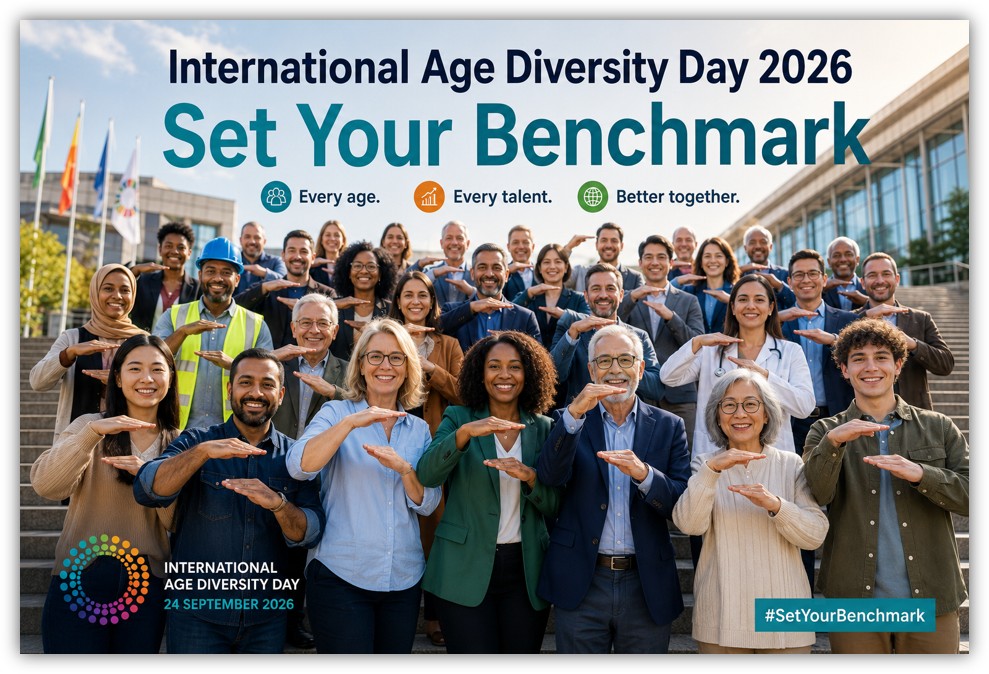
Every year, organisations around the world celebrate a wide range of diversity and inclusion initiatives. These events create opportunities to raise awareness, share experiences and encourage positive action. Yet despite growing recognition of diversity in the workplace, one characteristic continues to receive less attention than many others…Age.
Age influences how people enter the workforce, develop their careers, access opportunities and experience workplace culture. It shapes the experiences of younger workers seeking to establish themselves, mid-career professionals navigating change and older employees looking to continue contributing their skills and expertise…Age affects everyone.
That is why International Age Diversity Day was created. Since its launch in 2019, International Age Diversity Day has provided an opportunity for organisations, leaders and individuals to champion age inclusion and challenge age-based stereotypes wherever they exist.
The movement continues to grow, and in 2026, the theme is simple but powerful – Set Your Benchmark.
Why Age Inclusion Matters Now
The world of work is changing. People are living longer, careers are becoming less linear and organisations are managing increasingly multigenerational workforces. In many workplaces, four generations work side by side, with five generations becoming an emerging reality.
At the same time, labour shortages, technological change and evolving employee expectations are forcing organisations to think differently about talent. Age can no longer be treated as a secondary issue…it is becoming a strategic workforce consideration.
Organisations that fail to recognise the value of age diversity risk overlooking talent, experience and perspectives that are essential for future success. Those that embrace age inclusion are better positioned to attract, retain and develop talent across the entire workforce.
From Awareness to Action
Raising awareness remains important. For many years, age inclusion advocates have worked to challenge stereotypes and encourage organisations to recognise age as an important aspect of diversity.
That work continues, however, awareness alone is not enough. Increasingly, employers are asking practical questions:
-
How age-inclusive are we today?
-
What are we doing well?
-
Where are the gaps?
-
How do we compare with others?
-
What should we do next?